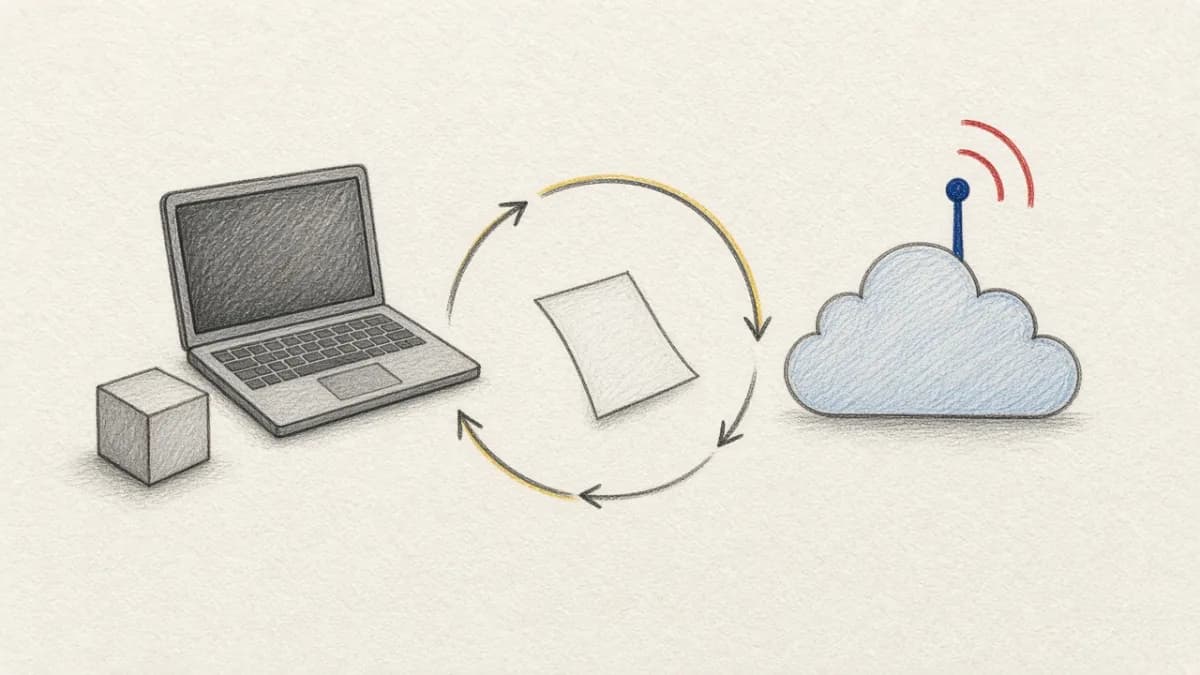
LangChain vs Pixeltable: Different Solutions for Different Problems#
If you're building RAG systems or AI applications, you've likely encountered both LangChain and Pixeltable. While they're sometimes mentioned together, they solve fundamentally different problems and excel in different scenarios.
LangChain is an orchestration framework that helps you chain together LLM calls, prompts, and tools. It's designed to make complex AI workflows programmable and modular.
Pixeltable is a unified AI data infrastructure that handles storage, transformation, orchestration, and versioning declaratively. It's designed to eliminate data plumbing complexity for multimodal AI.
This comparison helps you understand when to use which tool, or how to use them together effectively.
Core Architectural Differences#
LangChain: Application-Level Orchestration Framework#
- Focus: Chaining LLM calls, prompt management, tool integration
- Architecture: Python framework for building AI applications
- Data Management: Delegates to external databases (you manage this)
- Execution Model: Imperative chains and graphs you define
- Primary Use Case: Orchestrating complex LLM workflows
Pixeltable: Declarative AI Data Infrastructure#
- Focus: Unified multimodal data storage, transformation, and orchestration
- Architecture: Data-centric platform with built-in AI operations
- Data Management: Native support for video, images, audio, documents
- Execution Model: Declarative computed columns with automatic dependency tracking
- Primary Use Case: Eliminating data plumbing for multimodal AI
Feature-by-Feature Comparison#
| Capability | LangChain | Pixeltable | Winner |
|---|---|---|---|
| LLM Orchestration | ✅ Excellent - designed for this | ✅ Good - via computed columns | LangChain |
| Multimodal Data Storage | ❌ External databases required | ✅ Native Video, Image, Audio, Document | Pixeltable |
| Vector Search | ⚠️ Integrates external vector DBs | ✅ Built-in, automatically managed | Pixeltable |
| Incremental Processing | ❌ Manual implementation required | ✅ Automatic dependency tracking | Pixeltable |
| Data Versioning & Lineage | ❌ External tools needed | ✅ Built-in, automatic | Pixeltable |
| Prompt Templates | ✅ Excellent template system | ✅ String formatting & UDFs | Tie |
| Agent Memory | ⚠️ Requires external storage | ✅ Native persistent tables | Pixeltable |
| Tool Integration | ✅ Extensive tool ecosystem | ✅ Python UDFs + native functions | Tie |
| Video/Image Processing | ❌ Manual pipeline code | ✅ Native iterators and processing | Pixeltable |
| Community & Ecosystem | ✅ Very large, mature ecosystem | ⚠️ Growing, active community | LangChain |
Building a RAG System: Side-by-Side Comparison#
LangChain RAG Implementation#
Pixeltable RAG Implementation#
Key Differentiators: Why It Matters#
1. Incremental Computation: The 70% Cost Advantage#
LangChain: When you add new documents or change processing logic, you typically rebuild entire vector stores or reprocess all data. This is expensive and time-consuming.
Pixeltable: Automatic incremental updates. Only new or changed data is processed. Teams report 70%+ reduction in compute costs.
"With LangChain, adding 100 documents to our 10,000-document knowledge base meant re-embedding everything. With Pixeltable, only the 100 new documents are processed. This saves us $500+ monthly in OpenAI costs."
2. Multimodal Data: Beyond Text Documents#
LangChain: Primarily designed for text. Multimodal support requires custom loaders and external processing.
Pixeltable: Native multimodal support. Video, images, audio, and documents are first-class data types with built-in processing.
3. Data Lineage & Reproducibility#
LangChain: No built-in lineage tracking. You manually track which documents, chunks, and embeddings produced which results.
Pixeltable: Automatic versioning and lineage. Every result traces back to source data, processing functions, and model versions.
Decision Framework: When to Choose What#
Choose LangChain When You Need:#
- Rapid Prototyping: Quick experimentation with LLM chains and prompts
- Diverse Integrations: Access to 100+ prebuilt integrations and loaders
- Text-Only RAG: Working exclusively with text documents
- Existing Infrastructure: Already have data pipelines and vector databases
- Complex Agent Logic: Building sophisticated multi-step reasoning chains
- Established Patterns: Leveraging well-documented LangChain patterns
Choose Pixeltable When You Need:#
- Multimodal Workflows: Processing video, images, audio alongside text
- Data Management: Unified storage and transformation of AI data
- Incremental Processing: Cost efficiency through automatic incremental updates
- Production Reliability: Built-in versioning, lineage, and reproducibility
- Simplified Infrastructure: Eliminate separate vector databases and orchestration tools
- Data-Centric AI: Focus on data quality and management over chain complexity
Use Both Together When:#
- Pixeltable manages data, embeddings, and multimodal processing
- LangChain handles complex agent reasoning and tool orchestration
- You export Pixeltable data to LangChain for application logic
- LangChain’s Jev middleware gates the agent loop; Pixeltable stores the same judgment on the row — What Is Jev?
RAG Workflow Comparison: Text-Only vs Multimodal#
Text-Only RAG: Both Work Well#
For simple text-based RAG, both tools are viable. LangChain offers faster initial setup with prebuilt chains, while Pixeltable provides better long-term maintainability:
| Aspect | LangChain | Pixeltable |
|---|---|---|
| Initial Setup Time | ⚡ Fast (30 minutes) | ⚡ Fast (30 minutes) |
| Adding 1000 New Docs | ⚠️ Rebuild vector store (hours) | ✅ Incremental (minutes) |
| Changing Chunking | ❌ Rebuild everything | ✅ Automatic cascade |
| Production Debugging | ❌ Manual lineage tracking | ✅ Built-in lineage |
Multimodal RAG: Pixeltable's Domain#
For multimodal RAG systems, Pixeltable provides capabilities that would require extensive custom code in LangChain:
Production Readiness Comparison#
LangChain in Production#
Strengths:
- Mature patterns for common use cases
- Extensive community knowledge and examples
- LangSmith for monitoring and debugging
- Active development and frequent updates
Challenges:
- Must build custom data pipeline infrastructure
- Vector database synchronization is manual
- Versioning and lineage require external tools
- Multimodal support requires significant custom code
- Incremental processing must be implemented manually
Pixeltable in Production#
Strengths:
- Built-in data management and versioning
- Automatic incremental processing saves costs
- Native multimodal support
- Complete lineage tracking for debugging
- Unified infrastructure reduces operational complexity
Challenges:
- Smaller ecosystem compared to LangChain
- Learning curve for declarative patterns
- Fewer prebuilt chain templates
Cost Comparison: Real-World Scenarios#
Scenario 1: 10,000 Document Knowledge Base#
| Operation | LangChain | Pixeltable |
|---|---|---|
| Initial Setup | $50 (embeddings) | $50 (embeddings) |
| Add 100 New Docs | $50 (re-embed all) | $0.50 (only new docs) |
| Change Chunking | $50 (rebuild) | $50 (recompute) |
| Vector DB Cost/Month | $70+ (Pinecone/Chroma) | $0 (built-in) |
| 6-Month Total | $500-800 | $100-150 |
Real-World Migration Stories#
Document Intelligence Startup#
"We built our MVP with LangChain and hit scaling issues immediately. Vector store rebuilds were taking hours, we had no data lineage, and adding multimodal support was impossible. We rebuilt with Pixeltable in 2 weeks. Now incremental updates save us 80% on compute, and we can process PDFs with images seamlessly."
Healthcare RAG System#
"FDA compliance requires complete data lineage. LangChain doesn't provide this out of the box. Pixeltable's automatic versioning and lineage tracking solved our audit trail requirements without custom code."
The Hybrid Approach: Best of Both Worlds#
Many teams use Pixeltable for data infrastructure and export to LangChain for application logic:
Agent Memory: A Critical Difference#
For stateful AI agents, memory management is crucial:
LangChain Memory#
Pixeltable Memory#
Community and Ecosystem Considerations#
LangChain Ecosystem#
- ✅ Very large community (~80K GitHub stars)
- ✅ Extensive documentation and tutorials
- ✅ 100+ integrations and loaders
- ✅ Active Discord and support forums
- ✅ Commercial backing (LangChain Inc.)
Pixeltable Ecosystem#
- ⚡ Growing community (~2.5K GitHub stars)
- ✅ Comprehensive documentation
- ✅ 20+ AI provider integrations
- ✅ Active Discord community
- ✅ Open source, Apache 2.0
- ✅ Backed by The General Partnership ($5.5M seed)
Migration Guide: LangChain to Pixeltable#
Step-by-Step Migration#
- Audit current LangChain implementation - identify data sources, embeddings, chains
- Map to Pixeltable concepts - documents → tables, chains → computed columns
- Rebuild data layer - migrate to Pixeltable tables and views
- Implement retrieval - use @pxt.query for reusable retrieval logic
- Migrate or integrate chains - either rewrite in Pixeltable or keep LangChain for orchestration
- Test and validate - ensure parity with existing system
- Deploy incrementally - run both systems in parallel during migration
Migration Example#
Conclusion: Choose Based on Your Primary Challenge#
LangChain and Pixeltable solve different problems:
LangChain excels when your primary challenge is orchestrating complex LLM chains, managing prompts, and building sophisticated agent reasoning. It's an application framework that helps you compose AI applications.
Pixeltable excels when your primary challenge is managing multimodal data, maintaining vector index synchronization, ensuring reproducibility, and eliminating data plumbing complexity. It's infrastructure that makes AI data management disappear.
The choice isn't binary: many production systems use both, with Pixeltable handling data infrastructure and LangChain handling application orchestration. But if you're drowning in data pipeline complexity, spending 70% of your time on infrastructure, or working with multimodal data, Pixeltable's unified approach eliminates problems that LangChain doesn't address.
Explore Both Platforms#
- Try Pixeltable on GitHub - Experience unified AI infrastructure
- Build Your First Pixeltable RAG System - 10-minute tutorial
- Production RAG Best Practices - Deep dive on RAG systems
- Declarative AI Infrastructure - Understand the approach
- AI Transformations Belong in the Schema - Why schema-native AI replaces chain-based orchestration
- LangChain Documentation - Explore LangChain capabilities
- Join Pixeltable Discord - Discuss your use case
The right tool depends on your specific needs. Choose infrastructure that matches your primary challenges. 🎯