Summary: On August 30, 2026, Ian Macomber wrote The Shape and Feel of the Post-AI Data Stack: AI made producing analysis cheap; it did not make agreeing on reality cheap. The scarce resource is consensus, and data teams encode judgment into infrastructure so agents answer without the analyst in the room. That diagnosis is right. The stack he draws is still a warehouse: semantic layer, dashboards as llms.txt, unstructured data “inside the boundary” by tagging Gong calls into SQL columns. Flattening a call into loss_reason is not beyond SQL. A multimodal data table keeps the audio, the transcript, the tags, and the index in one versioned schema. That is Pixeltable. pip install pixeltable.
What the Essay Gets Right#
The four eras are a clean history of blast radius: on-prem OLTP (~2013), cloud warehouse (~2016), Modern Data Stack + Reverse ETL (~2020), agents everywhere (~2026). Each step expanded what a data scientist could see or do. The post-AI job is not another dashboard. It is encoding “what’s true, what matters, and why” so every interface—coding agent, Slack bot, BI—returns the same answer.
Three requirements travel: artifacts agents can read, tools agents can operate without a clunky UI, context that is not locked in one vendor’s proprietary language. Don’t put the company’s intelligence in someone else’s interface. Don’t let every correction train a vendor instead of your stack. Agree.
The Stack Is Still a Warehouse#
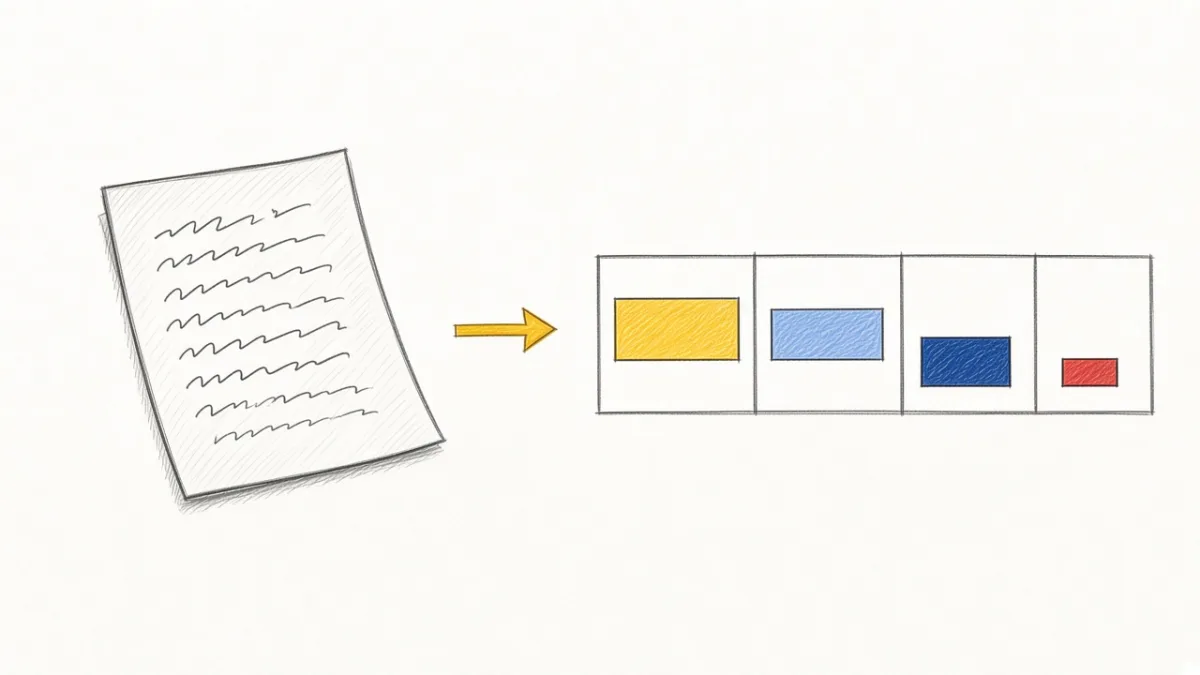
“Everything is inside the boundary now, including unstructured data.” Look at how it gets inside. Run an AI tagger offline. Write loss_reason, objection_type, mentioned_competitor back as structured fields. Then GROUP BY in Snowflake like merchant category. The call itself is gone. The version of the prompt that tagged it is gone unless you built that elsewhere. When a vendor’s tagging distribution shifts and you cannot reproduce win/loss, that is the Frankenstein stack with a nicer name.
A semantic layer over warehouse tables is the right control plane for Card TPV and NRR. It is not a type system for video, audio, or documents. Same hole as a generic FILE column and as an HTTP handler next to Postgres: the engine still does not know the blob is a call.
Beyond SQL Is the Actual Job#
Stakeholders will ask “why are we losing deals in construction?” and “what’s the Travel pod’s north star?” in the same chat. The second is SQL-shaped. The first is media-shaped. Pre-modeling meaning into columns is useful. Doing it as a one-shot vendor pipeline, then hoping the warehouse is the system of record, is how consensus diverges the next time the prompt or the model changes.
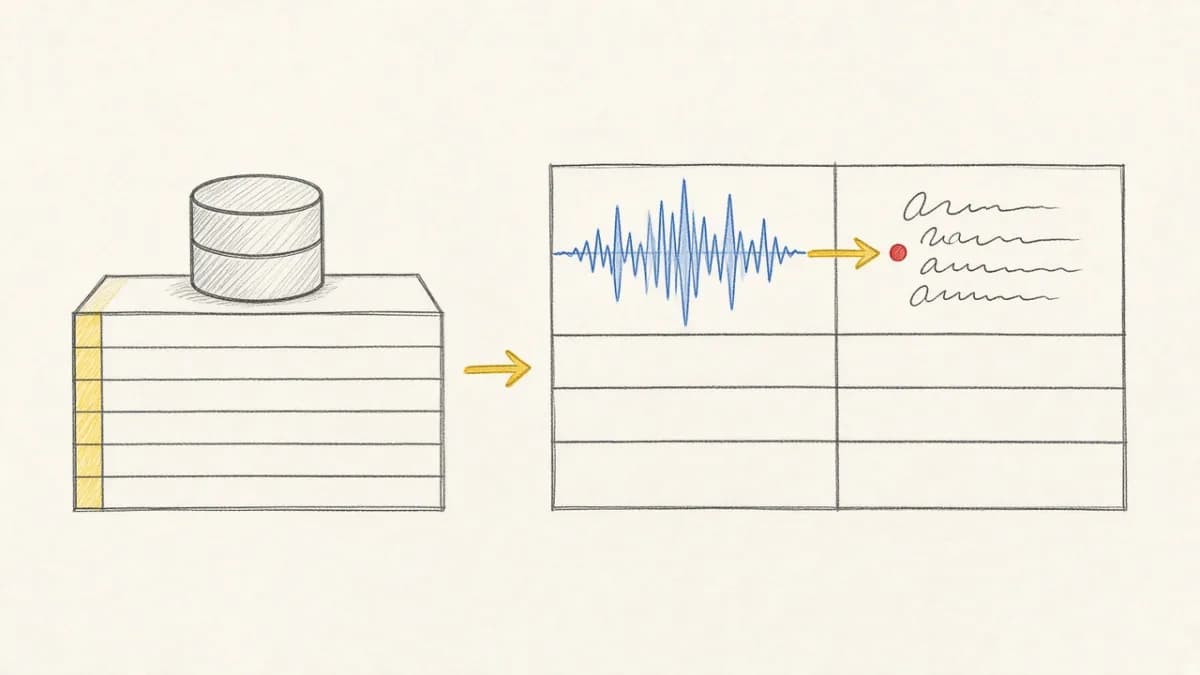
Encode the tagger as a computed column on pxt.Audio (or Video, Document). Insert a call. Transcript and tags land. Change the taxonomy and only new or changed rows recompute. Agents query the same table the analyst defined—not a Slackbot’s private narrative. That is computed columns plus JSON columns for non-deterministic extracts.
| Post-AI warehouse stack | Pixeltable | |
|---|---|---|
| Where unstructured lives | Tagged into SQL, source in a vendor | Typed Audio / Video / Document columns |
| How judgment is encoded | LookML / dbt / proprietary semantic DSL | Computed columns and views in Python |
| When it runs | Batch tagger / next dashboard click | On insert and on source change |
| Agent surface | Per-tool llms.txt + MCP if the vendor shipped one | Same catalog: SDK, MCP, optional FastAPIRouter |
| Consensus | Eval the board-deck question across UIs | One schema, versioned; same query, same lineage |
| Who compounds the context | Your warehouse—or the vendor that tagged Gong | Your table history. You own the prompt column. |
Encode the Tagger, Don’t Outsource It#
Same Gong-shaped question. The taxonomy is a column, not a black-box Salesforce field:
New calls only run Whisper and the extract on new rows. Swap the prompt and you get table history, not a vendor who “couldn’t explain, debug, or revert.” For video and docs, same pattern: frames and detections, chunks and embeddings.
Agent-Operable, Agent-Agnostic#
i really don’t want to use your agent, i want to use my agent to use your thing. Pixeltable is a Python catalog, not a BI UI you click until you quit. Any coding agent can insert, select, and .similarity(). MCP and HTTP are adapters on that catalog—not a second semantic language you rewrite every quarter. That is the opposite of locking models, dashboards, and users into one vendor’s agent. See agent data plane, not dashboard and the harness you cannot vibe-code.
Consensus Is a Schema, Not a Folder#
Pre-AI consensus was scarcity: nested Looker folders, expensive dashboards. Post-AI, everyone can spin a different metric. Testing the board-deck question across Slack vs coding agent vs BI is a good eval. It still assumes the truth lives in SQL. For media, consensus is: one typed table, one computed taxonomy, lineage from clip to tag. If two agents disagree, you read the column definition—not four traces and a hope that the next frontier model will guess your Q2 vertical mapping.
The Modern Data Stack was built for analytics. Bolting agents onto it does not make it a multimodal system of record. Migration path: leave the warehouse for NRR; put calls, video, and docs in Pixeltable.
When to Use Pixeltable#
Use Pixeltable when the question touches audio, video, images, or documents and you need the extract to stay consistent as files arrive. Keep the warehouse for the metrics the board already trusts. Do not start the Gong graph in a tagger you do not version.
FAQ#
Is a semantic layer a multimodal table?#
No. A semantic layer names warehouse metrics. A multimodal table has typed media columns and computed transforms on those columns.
Should agents stop asking SQL-shaped questions?#
No. SQL is the right tool for 100m transaction rows. It is the wrong tool for 100k raw call recordings unless you first declare the parse as data you own.
Why not let a vendor tag unstructured data into Salesforce?#
Because the next distribution shift is their incident and your un-reproducible win/loss. Version the prompt on your table.
Does Pixeltable replace the warehouse?#
No. It is the write path for multimodal AI. Export curated columns if BI needs labels, not blobs.
Get Started#
- Install:
pip install pixeltable - Docs: Quick start · Computed columns
- Definition: What is a multimodal data table?
See Also#
- The Unified Multimodal Backend Agents Build With
- What is a multimodal data table?
- Migrating from the Modern Data Stack
- Who owns the multimodal data plane
- Your agent needs a data plane, not a dashboard
- JSON columns for LLM outputs
- Schema-driven infrastructure
- The AI Frankenstein stack
- Economics of incremental AI