The Enterprise Platform vs. Developer Reality Gap#
If you've ever tried to build an AI application with complex data workflows, you've probably heard the advice: "Just use Databricks." It's powerful, it's proven, it handles massive scale. But here's the reality check most developers face:
"I just want to process some videos with AI models and build a search index. Do I really need to set up a entire Databricks workspace, learn Spark, manage clusters, and pay enterprise pricing just to get started?"
The answer is no. While Databricks excels at enterprise-scale analytics and massive data processing, there's a significant gap for individual developers, small teams, and researchers who need the same declarative data processing power without the enterprise overhead.
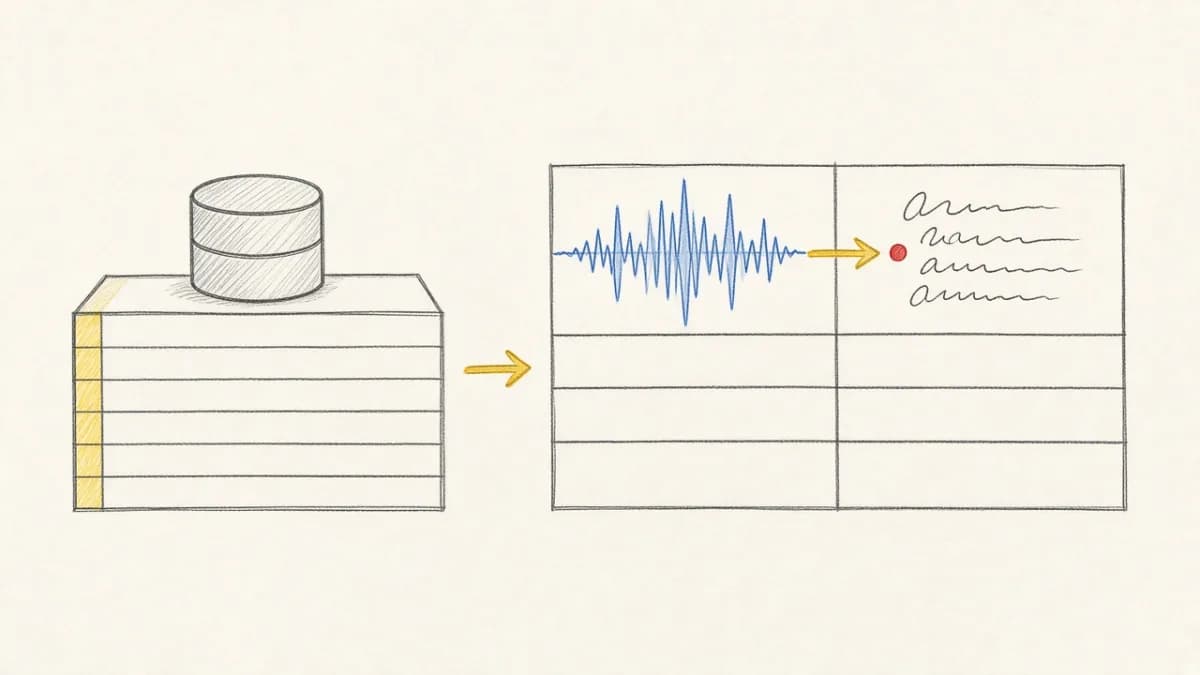
This is exactly why AI developers are choosing Pixeltable as their open source, local-first, multimodal alternative to Databricks. It brings the best concepts from enterprise platforms (declarative workflows, incremental computation, automatic versioning) into a simple Python SDK that runs anywhere.
Enterprise Platforms vs. Developer-First Tools: Understanding the Divide#
The modern data and AI landscape is split between two very different philosophies:
Enterprise Platform Philosophy (Databricks, Snowflake, etc.)#
- Cloud-First: Designed for teams with dedicated cloud infrastructure and budgets
- Scale-Optimized: Built to handle petabytes of data and thousands of concurrent users
- Enterprise Features: Complex governance, security, and collaboration tools
- Learning Curve: Requires specialized knowledge of distributed systems, Spark, etc.
- Cost Structure: Enterprise pricing models that can be prohibitive for smaller teams
Developer-First Philosophy (Pixeltable)#
- Local-First: Works perfectly on your laptop, scales when you need it
- Simplicity-Optimized: Single Python SDK, no complex setup or cluster management
- Developer Experience: Intuitive APIs that feel like using pandas or SQLAlchemy
- Immediate Productivity:
pip install pixeltableand you're building AI apps - Open Source: No vendor lock-in, customize and extend as needed
Why Local-First Matters for AI Development#
The local-first development approach offers compelling advantages for AI developers:
🚀 Immediate Iteration and Debugging#
With Pixeltable, you can test complex multimodal workflows instantly on your local machine:
💰 Cost-Effective Experimentation#
No cloud costs during development, no cluster spin-up fees, no data transfer charges. Experiment freely on your local machine, then deploy when ready.
🔒 Complete Data Privacy and Control#
Your data never leaves your environment unless you explicitly decide to export it. Perfect for sensitive data, proprietary models, or compliance requirements.
📱 Offline Development Capability#
Build and test AI workflows without internet connectivity. The entire Pixeltable infrastructure runs locally.
Multimodal Native vs. Retrofit: A Fundamental Difference#
Here's where Pixeltable truly differentiates itself. While enterprise platforms like Databricks are retrofitting AI capabilities onto data processing architectures built for structured analytics, Pixeltable was designed from the ground up for multimodal AI workloads.
Databricks: Retrofitted AI Capabilities#
- Built for Structured Data: Originally designed for tabular data and SQL analytics
- AI as Add-On: Machine learning capabilities layered on top of Spark infrastructure
- Complex Media Handling: Requires custom code and external tools for video, audio, images
- Spark Overhead: Distributed computing overhead even for simple AI tasks
Pixeltable: Multimodal Native Architecture#
- Built for AI Workloads: Designed specifically for multimodal AI applications
- Native Media Types: Video, Image, Audio, Document as first-class data types
- AI-First Operations: Cross-modal transformations (extract audio from video, etc.) built-in
- Optimized Processing: No distributed overhead for typical AI workloads
Single SDK Simplicity: From Complex Platforms to Simple Imports#
The difference in developer experience is dramatic. Let's compare building the same multimodal AI workflow:
Databricks Approach: Platform Complexity#
Pixeltable Approach: Single SDK Elegance#
Same capabilities, 95% less code, zero infrastructure setup. That's the power of a developer-first approach.
Feature-by-Feature: Pixeltable vs. Databricks#
Let's break down how these platforms compare across key AI development needs:
| Capability | Databricks | Pixeltable |
|---|---|---|
| Setup Complexity | Cloud workspace, cluster management, multiple services | pip install pixeltable |
| Local Development | Cloud-dependent, limited local testing | Full local development, offline capable |
| Multimodal Data | Custom code required, external tools | Native Video, Image, Audio, Document types |
| AI Model Integration | MLflow, custom endpoints, complex setup | Built-in OpenAI, Hugging Face, 20+ providers |
| Vector Search | Separate vector search service | Built-in embedding indexes |
| Incremental Updates | Manual Delta Lake optimization | Automatic dependency tracking |
| Cost for Small Teams | High ($$$), enterprise pricing | Free (open source) + your compute |
| Learning Curve | Steep (Spark, distributed systems) | Gentle (familiar Python, SQL-like) |
Local-First Development: The Pixeltable Advantage#
The local-first development philosophy means you can build, test, and iterate on complex AI workflows entirely on your local machine. This approach offers transformative benefits:
⚡ Instant Feedback Loops#
No waiting for cloud resources, no cluster spin-up times, no network latency. Test your AI workflows as fast as you can type:
💸 Zero Infrastructure Costs#
While Databricks charges for cluster time whether you're using it or not, Pixeltable only costs what you pay for AI model API calls. No idle cluster fees, no storage charges during development.
🌍 True Portability#
Your Pixeltable workflows run identically on your laptop, a server, or in the cloud. No vendor lock-in, no platform-specific modifications needed.
Multimodal Native: Built for the AI Era#
Traditional platforms like Databricks were designed for the big data era of structured analytics. Pixeltable was designed for the AI era of multimodal workflows. The difference is profound:
Native AI Operations#
Cross-modal operations that would require custom distributed code in Databricks are simple one-liners in Pixeltable:
AI-Aware Indexing and Search#
While Databricks requires separate vector search services, Pixeltable includes intelligent embedding management built-in, making any data searchable with one line.
Real-World Scenario: Building a Video Analysis Pipeline#
Let's compare building a practical video analysis system for content creators who want to automatically tag and search their video library:
The Difference in Practice#
Databricks requires setting up cloud workspaces, managing clusters, writing complex Spark UDFs, and integrating multiple services. With Pixeltable, you get the same multimodal AI capabilities in a simple Python SDK that runs locally or in the cloud.
Decision Framework: When to Choose What#
Both platforms have their place. Here's how to decide:
Choose Databricks When You Need:#
- Massive Scale: Processing petabytes of data across hundreds of nodes
- Enterprise Infrastructure: Complex governance, security, and compliance requirements
- Existing Investment: Already using Spark ecosystem and have specialized expertise
- Traditional Analytics: Heavy focus on SQL-based business intelligence and reporting
- Large Data Teams: 50+ data engineers who need sophisticated collaboration tools
Choose Pixeltable When You Need:#
- Rapid AI Development: Building AI applications, not data warehouses
- Multimodal Workflows: Working with video, images, audio, documents alongside data
- Local-First Development: Want to build and test on your machine
- Cost Efficiency: Small teams or individual developers with budget constraints
- Open Source Requirements: Need customization and vendor independence
- Simple Operations: Want powerful capabilities without operational complexity
Migration Story: From Databricks to Pixeltable#
Here's a real story from an AI startup that migrated from Databricks to Pixeltable:
"We were spending $3,000/month on Databricks clusters just to process a few hundred videos for our AI training pipeline. The setup was complex, debugging was painful, and our developers needed specialized Spark knowledge.
With Pixeltable, we rebuilt the entire pipeline in a weekend. Now it runs on our laptops during development and on a simple cloud instance in production. We went from $3,000/month to $50/month in infrastructure costs, and our iteration speed increased 10x because developers can test everything locally."
The Hybrid Approach: Best of Both Worlds#
You don't have to choose exclusively. Many teams use Pixeltable for AI workflow development and export to Databricks when they need large-scale distributed analytics.
The Open Source Advantage#
Pixeltable's open source nature provides benefits that go beyond cost savings:
🛠️ Unlimited Customization#
Extend Pixeltable with custom data types, AI providers, or specialized operations using simple Python UDFs that integrate seamlessly with built-in functions.
🔓 Complete Vendor Independence#
No licensing fees, no vendor lock-in, no pricing surprises. Your AI infrastructure is yours to control and modify.
👥 Community-Driven Innovation#
Benefit from contributions across the entire AI community. New AI providers, optimizations, and features come from diverse contributors worldwide.
Performance Considerations: Local-First That Scales#
A common misconception is that local-first means limited scale. Pixeltable's architecture is designed to scale from laptop to cloud seamlessly:
Intelligent Processing#
- Incremental Computation: Only process what's changed, saving 70%+ on compute costs
- Efficient Caching: Smart caching of expensive AI operations
- Batch Optimization: Automatic batching for model inference
- Memory Management: Stream processing for large datasets
Flexible Deployment#
The same Pixeltable code works on your laptop, cloud instances, or on-premise servers without modification, for true portability across environments.
Real-World Success Stories#
Media Company: 90% Cost Reduction#
A digital media company processing thousands of videos daily:
- Before: $15,000/month Databricks costs, 3-day setup for new workflows
- After: $1,500/month infrastructure, same-day workflow deployment
- Result: 90% cost reduction, 10x faster iteration
Research Lab: From Weeks to Hours#
An AI research lab processing multimodal datasets:
- Before: Weeks to set up evaluation pipelines on Databricks
- After: Hours to create sophisticated multimodal evaluations
- Result: 20x faster research iteration, more experiments
AI Startup: Focus on Product, Not Infrastructure#
A computer vision startup building image analysis products:
- Before: 80% of engineering time on infrastructure
- After: 80% of time on product features and AI models
- Result: Faster product development, better market fit
Getting Started: Your First AI Workflow in Minutes#
Ready to experience the difference? Here's how to get started with your own Databricks alternative:
Simple Setup#
Install with pip install pixeltable, set your API keys, and start building AI workflows immediately. The same declarative code works locally or in production.
Beyond "Alternative": A New Paradigm#
Calling Pixeltable a "Databricks alternative" sells it short. It's not trying to be Databricks – it's pioneering a new approach to AI infrastructure:
- Developer-Centric vs. Enterprise-Centric: Built for individual productivity, not organizational complexity
- AI-Native vs. Analytics-Native: Designed for multimodal AI workflows, not business intelligence
- Declarative vs. Imperative: Define outcomes, not processes
- Local-First vs. Cloud-First: Works everywhere, requires nothing
This represents the evolution of data infrastructure for the AI era – simpler, more focused, and dramatically more accessible.
The Growing Pixeltable Ecosystem#
The open source community is rapidly building around Pixeltable:
- 20+ AI Provider Integrations: OpenAI, Anthropic, Hugging Face, Google Gemini, and more
- Specialized Tools: FiftyOne integration, Label Studio support
- Export Capabilities: LanceDB, Parquet, and traditional database integration
- Extension Libraries: Pixelagent for AI agents, specialized domain packages
- Active Community: Growing Discord community, regular contributions, enterprise adoption
Production-Ready from Day One#
Don't let the simplicity fool you. Pixeltable includes enterprise-grade features:
- ACID Transactions: Data consistency guarantees
- Automatic Versioning: Complete audit trail of all changes
- Error Recovery: Graceful handling of AI model failures
- Horizontal Scaling: Deploy on multiple machines when needed
- Security: Fine-grained access controls and data protection
Conclusion: The Future of AI Infrastructure is Developer-First#
The AI revolution is being driven by individual developers and small teams, not just enterprise data departments. These innovators need tools that match their workflow: immediate, iterative, and intuitive.
While enterprise platforms like Databricks will continue to serve large organizations with massive data processing needs, the future belongs to developer-first tools that democratize sophisticated AI capabilities.
Pixeltable represents this future: all the power of enterprise AI infrastructure, packaged in a simple Python SDK that works anywhere. No clusters to manage, no vendor lock-in, no enterprise sales cycles – just powerful AI development tools that get out of your way.
The question isn't whether you need enterprise-scale infrastructure. The question is whether you want to spend your time building infrastructure or building AI applications that matter.
Start Building Today#
Ready to experience the future of AI infrastructure? Get started in minutes:
- Try Pixeltable on GitHub – Open source and ready to use
- Build Your First Project – 10-minute hands-on tutorial
- Interactive Playground – Try Pixeltable in your browser
- Quick Start Guide – Complete documentation
- Join our Discord Community – Connect with other developers
The future of AI development is local-first, multimodal native, and developer-centric. Experience the difference between complex enterprise platforms and the simplicity and power of Pixeltable.
Your next breakthrough AI application is just a pip install away. 🚀