The Data Consistency Nightmare in AI Pipelines#
Picture this: You have a video analysis pipeline with extracted frames, embeddings, object detection results, and LLM-generated summaries. A new video gets added. Now you need to:
- Extract frames from the new video
- Generate embeddings for each frame
- Run object detection on frames
- Create summaries based on detected objects
- Update vector indexes
- Invalidate cached results
- Handle failures and partial updates
- Maintain referential integrity
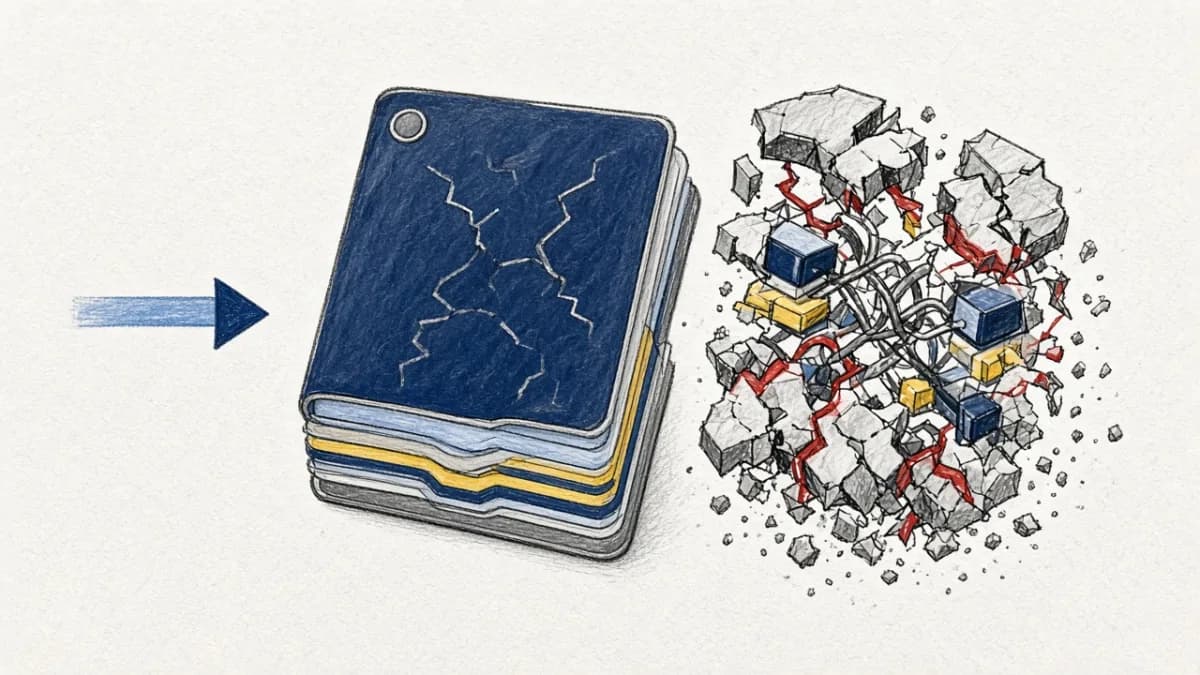
In traditional systems, you manage this complexity. You write orchestration code, track dependencies manually, and pray nothing breaks when the pipeline evolves. One missing update cascades into inconsistent data that's nearly impossible to debug.
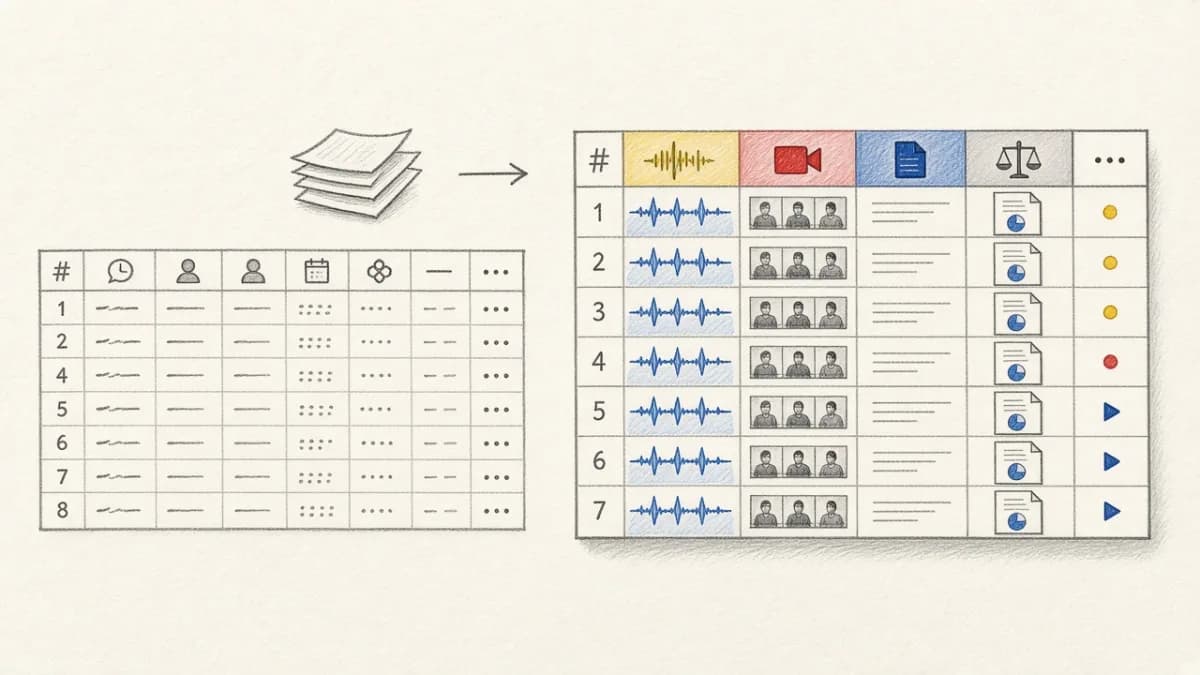
What if there was a better way? What if the system could automatically understand your data dependencies and handle all the complexity for you?
The Deceptively Simple Surface#
Pixeltable's computed columns look almost too simple. Let's build a correct example where one computed column depends on another:
This looks straightforward, but underneath, Pixeltable is building and managing a sophisticated dependency graph that ensures:
- ✅
detectionsis always computed beforedescription. - ✅ When a new image is inserted, both computations run in the correct order.
- ✅ If the definition for
detectionschanges,descriptionis automatically re-computed. - ✅ Only affected data is recomputed when changes occur.
Under the Hood: Dependency Graph Construction#
Step 1: Expression Analysis & Dependency Detection#
When you define a computed column, Pixeltable doesn't just store the function. It analyzes the expression to understand its dependencies:
This analysis creates a directed acyclic graph (DAG) where each node represents a column and edges represent dependencies.
Step 2: Topological Sort for Execution Order#
Pixeltable automatically determines the correct execution order using topological sorting of the dependency graph:
Incremental Magic: Only Computing What Changed#
Here's where Pixeltable really shines. When data changes, it doesn't recompute everything. It traces through the dependency graph to determine exactly what needs updating:
The result? Adding one new image to a collection of thousands doesn't trigger a full pipeline re-run. Only the new image's data is computed, saving immense time and cost.
Schema Evolution: When Computed Columns Change#
Real AI development involves experimentation. You'll want to change model parameters, switch embedding models, or modify prompts. Pixeltable's dependency system handles schema evolution elegantly:
Integration with Versioning System#
Schema changes create new table versions, and the dependency system respects version boundaries:
Bulletproof: Handling Failures in Complex Pipelines#
Real AI pipelines fail. APIs go down, models crash, data is malformed. Pixeltable's dependency system includes sophisticated failure handling:
Automatic Retry and Recovery#
Real-World Example: Complex Multi-Modal Pipeline#
Let's see the dependency system handle a realistic scenario - a content moderation pipeline with multiple AI models:
Performance: Smart Execution Strategies#
Parallel Execution of Independent Branches#
Automatic Batch Optimization#
Debugging: Visibility Into the Dependency Graph#
When things go wrong, you need visibility. Pixeltable provides tools to understand and debug your dependency graph:
What Makes Pixeltable's Dependencies Special#
1. Automatic Dependency Discovery#
- No manual declaration - Dependencies inferred from expressions
- Deep analysis - Understands complex nested expressions
- Cross-table dependencies - Views, snapshots, base tables
2. Incremental by Design#
- Change detection - Only recompute affected data
- Cascade optimization - Minimal recomputation propagation
- Version awareness - Schema changes handled elegantly
3. Production-Ready Reliability#
- Transactional consistency - ACID guarantees for AI pipelines
- Failure isolation - Partial failures don't corrupt the system
- Automatic retry - Smart recovery from transient failures
Compared to Traditional Approaches#
vs. Manual Orchestration (Airflow, etc.)#
| Traditional Orchestration | Pixeltable Dependencies |
|---|---|
| 🔴 Manual dependency definition | 🟢 Automatic discovery from expressions |
| 🔴 Full pipeline re-runs | 🟢 Incremental computation only |
| 🔴 Complex failure handling | 🟢 Automatic retry and recovery |
| 🔴 Separate orchestration layer | 🟢 Built into data layer |
vs. Feature Stores#
| Feature Stores | Pixeltable Dependencies |
|---|---|
| 🔴 Batch-oriented updates | 🟢 Real-time incremental updates |
| 🔴 External dependency management | 🟢 Integrated dependency graph |
| 🔴 Limited multimodal support | 🟢 Native multimodal dependencies |
Getting Started with Dependency Management#
The beauty is that you don't need to think about dependency management - it just works:
Advanced Dependency Patterns#
Cross-Table Dependencies#
Conditional Dependencies#
Conclusion: Dependency Management That Just Works#
Pixeltable's dependency graph system represents a fundamental shift in how we build AI data pipelines. Instead of manual orchestration with external tools, dependencies are:
- ✅ Automatically discovered from your column definitions
- ✅ Incrementally maintained with minimal recomputation
- ✅ Failure-resistant with automatic retry and recovery
- ✅ Version-aware for safe schema evolution
- ✅ Performance-optimized with parallel execution
The result? You focus on defining what you want computed, and Pixeltable handles how to compute it consistently, efficiently, and reliably.
This isn't just a convenience feature - it's architectural foundation that makes complex multimodal AI pipelines possible at production scale. When your computed columns automatically stay consistent, your entire application becomes more reliable.
Ready to experience dependency management that just works?
- Get started with Pixeltable
- Learn more about computed columns
- Read about Pixeltable's versioning system
- AI Transformations Belong in the Schema: the architectural essay on why dependency graphs replace DAGs
- Join our Discord community